
Wish Fulfillment
The importance of primary sources in writing your story...


Ann Patchett came to Portland recently as part of a book tour for her new novel, Whistler. The woman is a big deal. A couple of years ago, Time magazine even named her one of the 100 most influential people in the world. Naturally, in a book-loving city like Portland, the event was sold out.
“Let’s crash it,” I said to my friend Lisa when we found out we were too late to buy tickets. “Maybe we’ll be lucky, and they’ll let us in.”
Lisa, who is the type of person someone like me should hang out with more often because she’s up for anything, replied, “Hey, if we don’t get in, we’ll just go to the bar and have a beer.”
Serendipity. It’s not just the name of an all-girl band from the Chicago suburbs. To paraphrase a line from Paulo Coelho’s book, The Alchemist:
Sometimes the Universe conspires with you so that the thing you want to happen actually does–and in the most perfect way possible.
I think serendipity should be the name of Ann Patchett’s next book.
My friend and I showed up at the event more than an hour early, thinking we’d sweet-talk the ticket takers over a drink, so they’d let us grab empty seats after the show started. As nice as those young gatekeepers checking bags and slapping on wristbands were, they weren’t going to let us in without a ticket. They would, however, send anyone with an extra one our way.

It was a beautiful sunny evening, the kind Oregonians wait all year for, and no hardship to sit at a picnic table with a glass of rosé and watch the line of middle-aged women clutching their copies of Bel Canto. We were congratulating ourselves on being the kind of people who would crash an event when my friend cried out, “There’s the author.”
I turned around. “That’s not Ann Patchett,” I said, glancing at the woman in a cornflower blue linen dress coming down the sidewalk.
“Of course not,” she replied. It’s Eileen Garvin
Eileen Garvin. Have you read her book, Crow Talk? Put it on your list now!
Lisa, who is many things but would never call herself a writer, had met Eileen at a writer’s conference on the Oregon Coast that she’d attended with another friend last spring. I’d been a fan of Eileen’s ever since hearing her in conversation with my good friend, Elizabeth Rusch, at Powell’s Books in Portland.
Lisa called Eileen over, and we gushed our greetings with appropriate fan-girl enthusiasm before watching her disappear into the venue. It was already 7:00 pm, and we hadn’t yet scored a ticket to see Ann Patchett. Still, we counted the evening a success, thrilled to have met an author we both admired.
Not five minutes later, an elderly woman bounded up and waved a ticket at us. In a voice as exuberant as the swath of purple sweeping through her short gray hair, she exclaimed that she’d somehow ended up with an extra ticket. “ Do you want it?” she asked. We did indeed.

Barbara Lightheart. Is that not a perfect name for a romance writer? Did not do Venmo. While Lisa looked for an ATM, Barbara sat at the picnic table with me, downing her margarita and pouring out a steady stream of information. Within a minute and a half, I’d learned that she’d managed the volunteer program for the Travis County Jail outside of Austin, Texas, and before that had been a union organizer for the Teachers’ Union. She’d been in a serious car accident on Friday, February 13th, so she no longer drove. Instead, she’d taken three buses across town from her retirement home to get to the event. Almost as an afterthought, she added that she did not know how she was getting home that night.
“Good thing you met Lisa,” I told her. “She’ll be your ride home this evening.”
“If she hasn’t run off with my ticket,” Barbara said.
“Lisa’s good for it,” I answered. “She’s a saint. Much nicer than me.”
We had one ticket, which by all rights was Lisa’s since I’d committed her to driving 30 minutes across town, so when she returned, I told her I’d walk home. But 15 minutes before the show was about to begin, I met Bob and his wife Suzie and their exchange student from South Korea, who had an extra ticket near the front. Score!
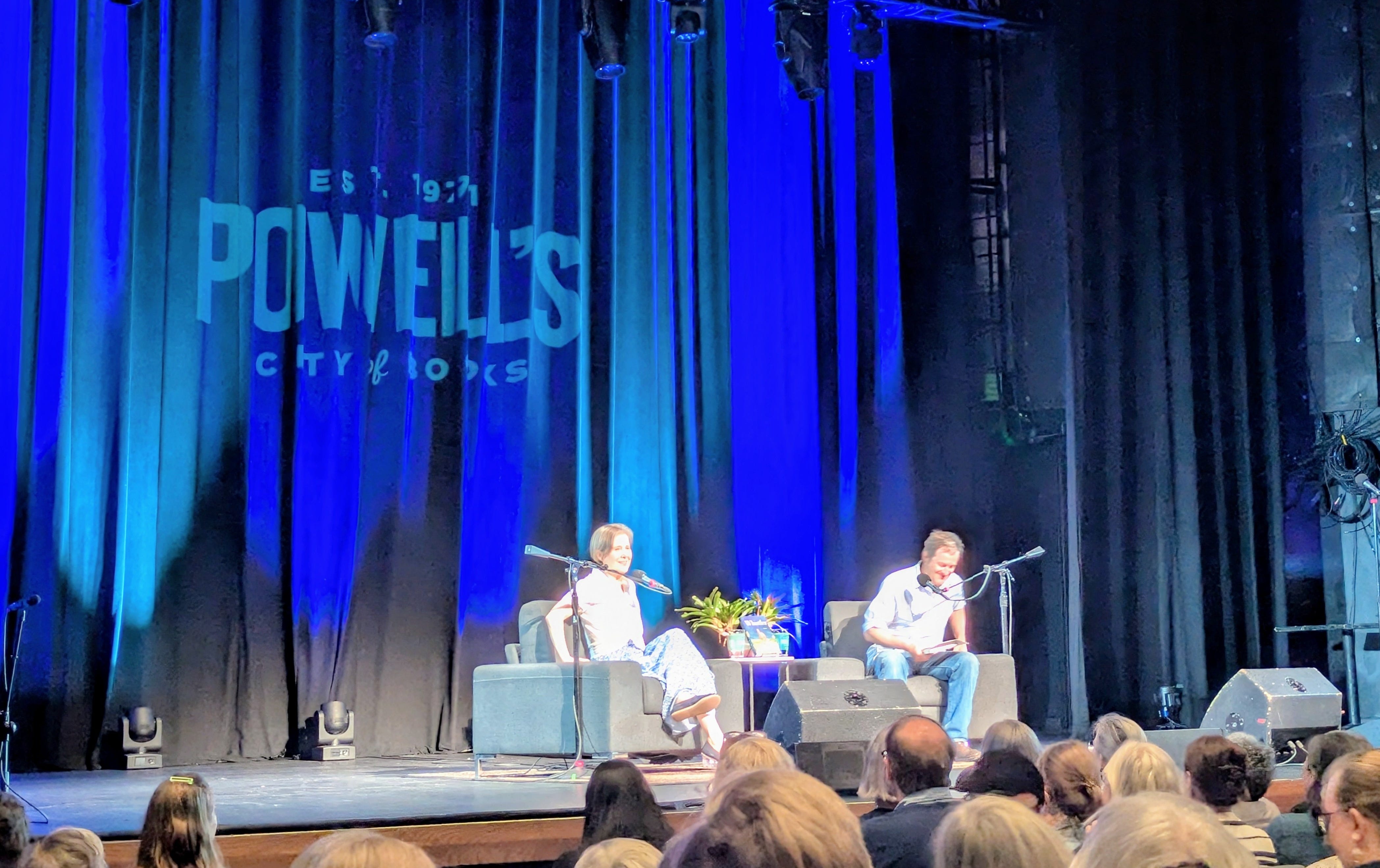
Ann did not take the stage alone. She was joined by Willy Vlautin a Portland writer with a southern twang and a sweetly self-deprecating sense of humor. His new book, The Left and The Lucky, is the newest addition to my nightstand. There’s always a fine balance between an author and the person leading the interview. Sometimes the questions are simplistic; at other times, fawning; rarely is there genuine synergy. Ann and Willy lit up the place, playing off each other the entire evening with riffs on topics as heavy as how to manage old age if you don’t have children (Ann: Long-term health insurance) to favorite audiobooks. Ann loved Surrender by Bono. Willy said that listening to Lucia Berlin’s A Manual for Cleaning Women with his band (yes, he’s a musician as well as an author) was one of his happiest moments.
And, of course, they discussed their new books and how woven through both novels are situations and people informed by life experience, but which are not the actual experience itself. Authors, they both agreed, are lucky in that they get to write the story the way they wish life had played out.
On this evening, my life played out more perfectly than I could have imagined.
An audience member posed the last question of the evening:
“Where do you find hope these days?”
It seems to be the question at more and more of these gatherings, and Ann answered it for all time. Looking impatiently out at the audience, she said,
“First of all, these are hardly the worst of times.” She went on to list events such as the plague and the crusades as having been much more serious. Then she talked about how she examines the sources of her information. “I look at the secondary sources–the media, the politicians, the pundits–all telling us these are dire times. Things are terrible. And then I look at the primary sources: me. My experiences are totally different from what the secondary sources are saying. I see people helping put up someone’s bag for them in the overhead compartment of an airplane, offering to fold a stroller for a mother carrying a baby. I see goodness.”*
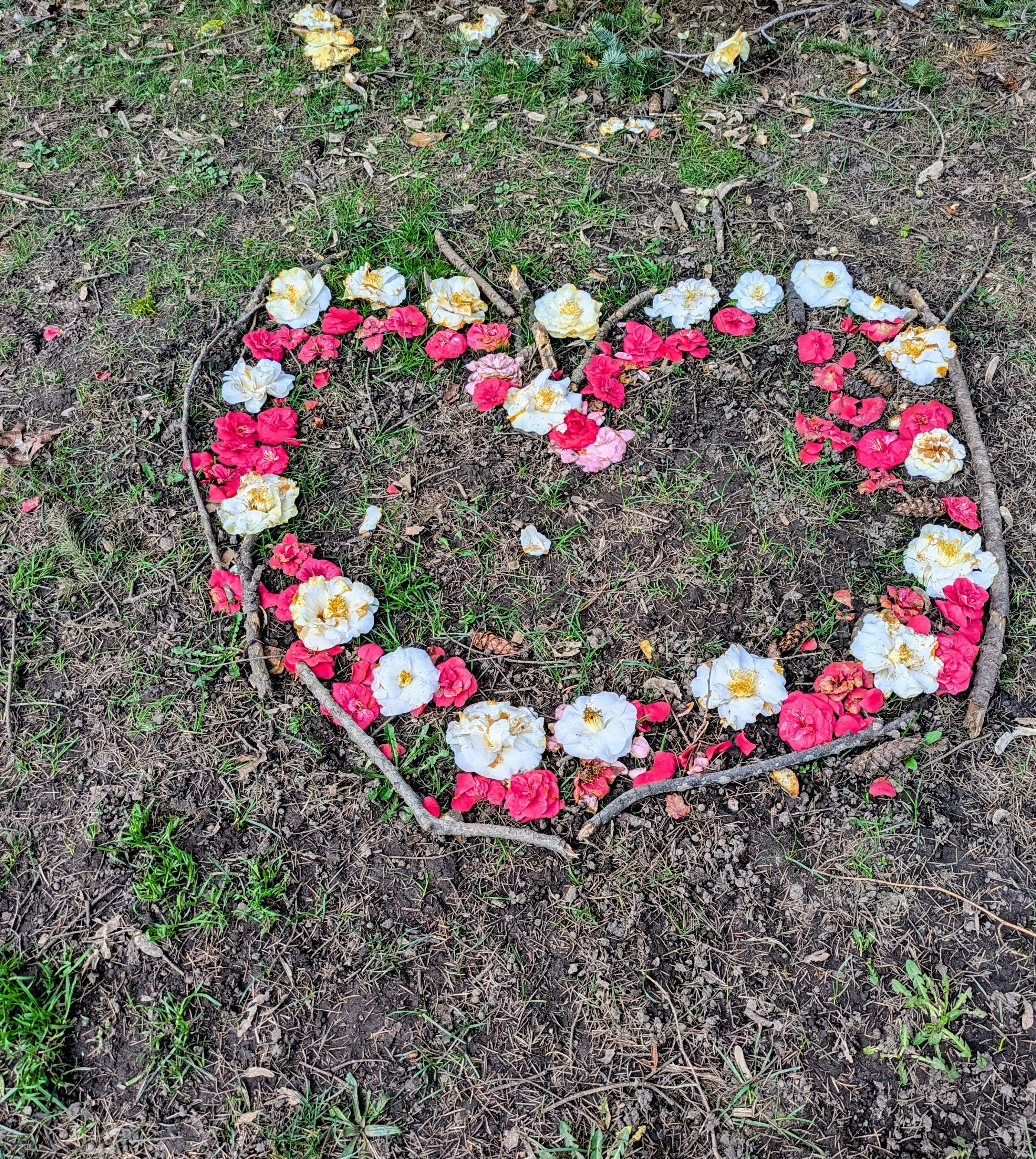
I sat back. It was true. I thought about the people I’d encountered just that day: the barista and young couple visiting from Los Angeles I’d chatted with at the coffee shop in the morning. Bob and Suzie, who’d given me their extra ticket and then, realizing both of our daughters lived in New York City, shared the names of two nice but inexpensive hotels. I thought about meeting someone who needed a ride across town at the same moment that we needed a ticket. Not so bad, this world of ours. Not so bad at all.
*paraphrased
Cheers to serendipity!
Fun to hear this thoughtfully crafted version of events after hearing Lisa’s breathless free-form account the morning after. And those tickets included copies of Whistler!